
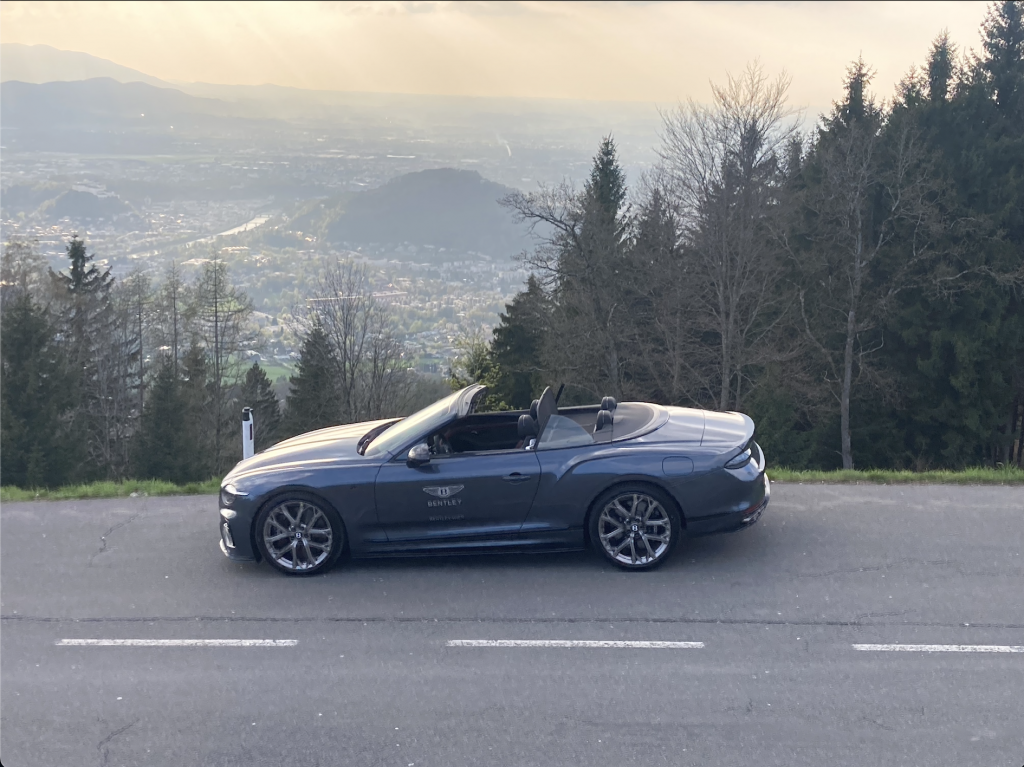
Excellence is an Attitude
#bentley #continental #gtc #s #luxury #grandtourer #cabrio #convertible #roadtest #salzburg #austria
For english review scroll down please.
Die Kunst, schnell schön zu leben.
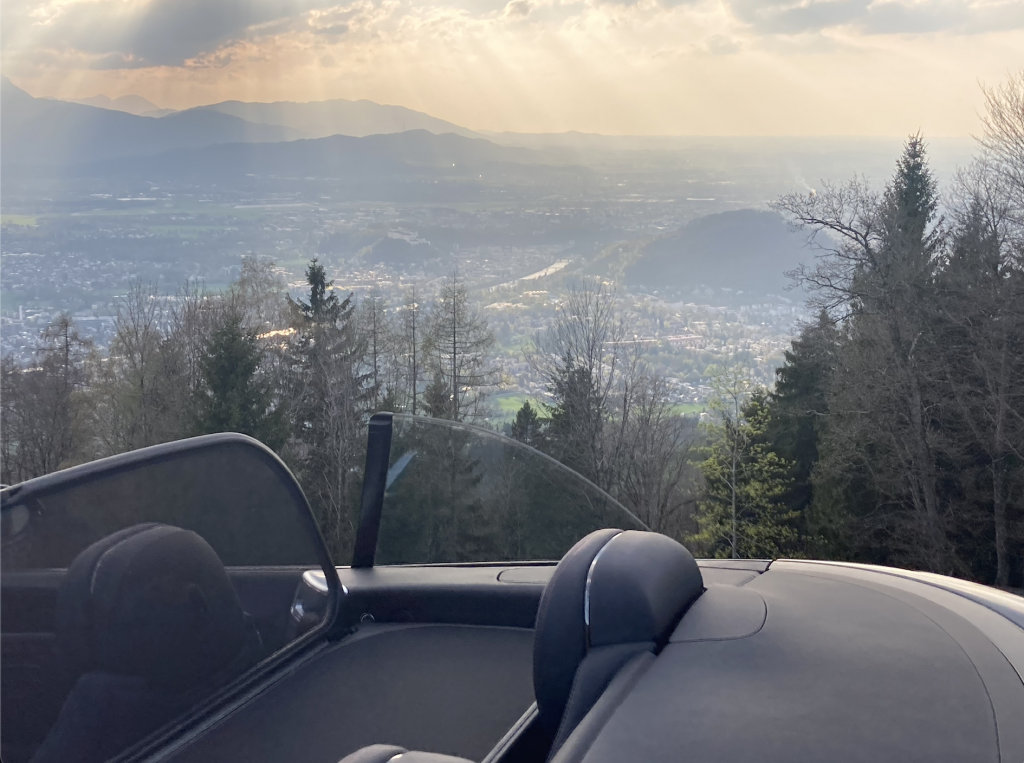
Es gab eine Zeit, da hätte die Vorstellung eines elektrifizierten Bentley bei Crewe ungefähr so viel Begeisterung ausgelöst wie ein Tempolimit. Bentley waren dafür gebaut, schnell zu fahren, weit zu fahren und dabei ein Leben zu führen, das sich nicht unbedingt an die Vernunft hielt. Die Bentley Boys wussten das schon vor hundert Jahren. Jetzt stehen wir mit offenem Dach in Salzburg, vor uns der Gaisberg, und fahren einen Continental GTC S mit V8-Hybrid. Der Antrieb ist neu. Die Idee dahinter erstaunlich zeitlos.
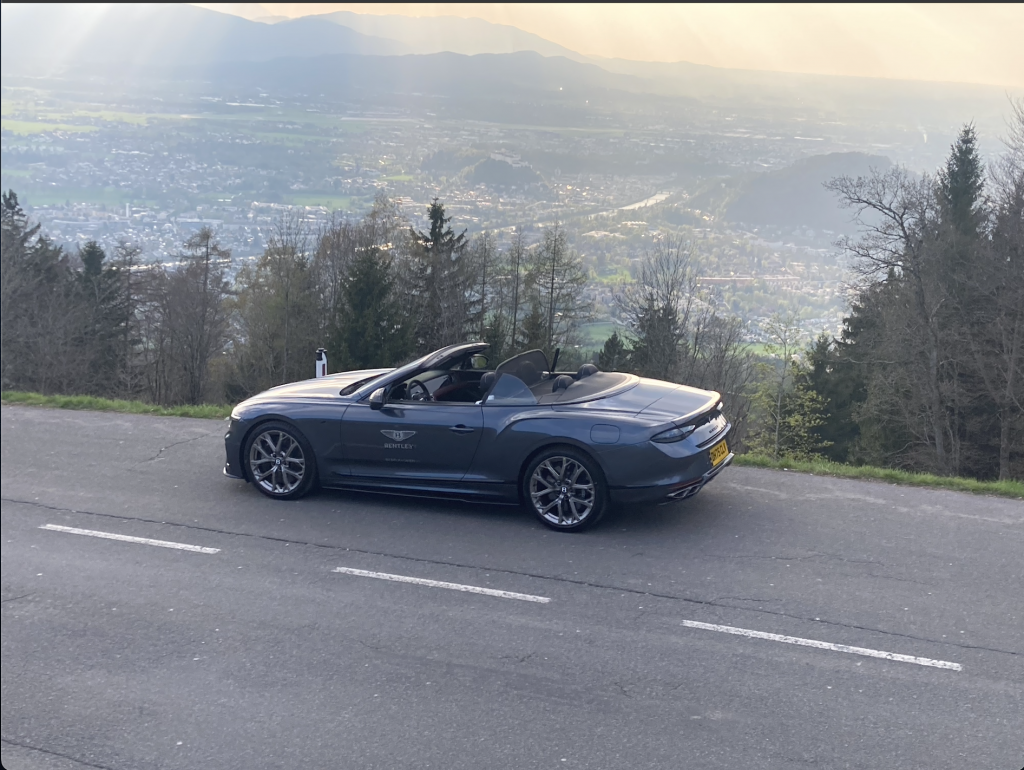
Die Bentley Boys waren keine Rennfahrer im heutigen Sinn. Zumindest nicht nur.Sie waren junge Männer mit Geld, Talent, Benzin im Blut und einer gewissen Neigung, das Leben nicht unnötig zu verkürzen, solange man es schnell genug genießen konnte.Bentley war in den 1920er-Jahren ihre Marke. Woolf Barnato, Sir Henry „Tim“ Birkin, Glen Kidston und ihre Gefährten fuhren Bentley bei Rennen, auf Straßen und vermutlich überall dort, wo es einen Grund gab, einen Motor zu starten.
Le Mans war das große Schaufenster.Die Nacht das natürliche Umfeld. Und der Bentley ein ziemlich gutes Werkzeug dafür.Man könnte lange darüber diskutieren, wie viel von dieser Lebensart heute noch in einem Continental steckt.
Am Gaisberg lässt sich die Frage zumindest stellen.
Der Gaisberg
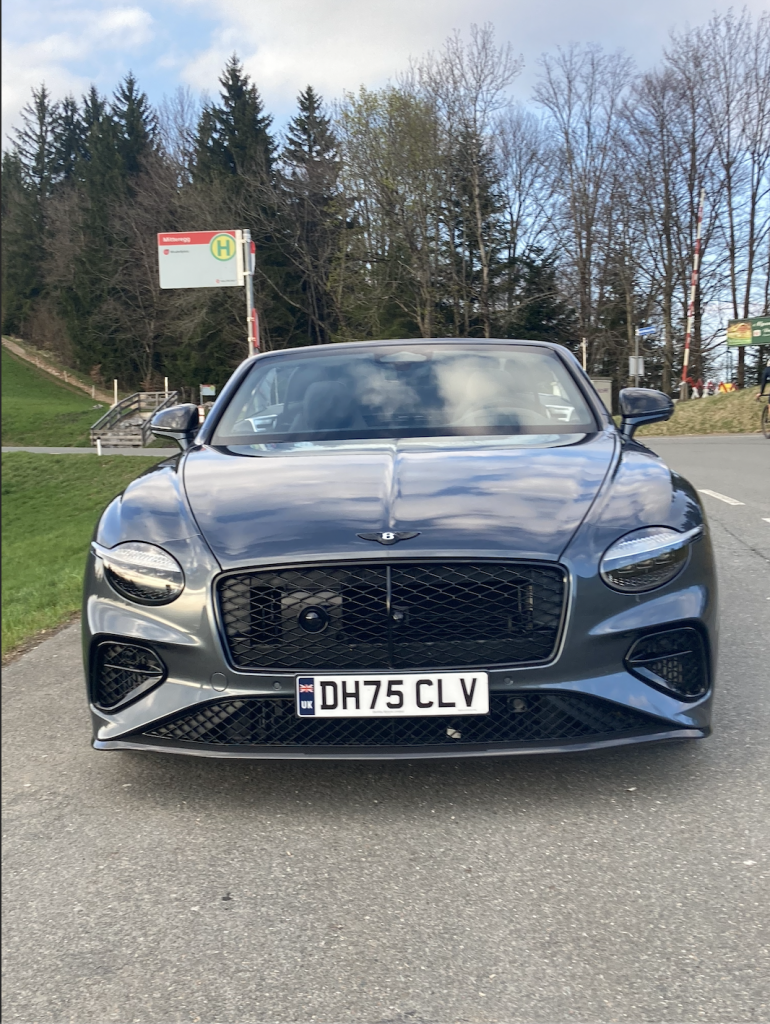
Der Gaisberg über Salzburg hat seine eigene Rennsportgeschichte.Von 1929 bis 1969 wurde hier gefahren, zunächst über eine längere Strecke von Gnigl hinauf, später über 8,65 Kilometer und 672 Höhenmeter. Zeitweise war das Gaisbergrennen Teil der Europabergmeisterschaft. Fahrer wie Rudolf Caracciola, Hans Herrmann und Gerhard Mitter waren hier unterwegs.
Die Autos waren damals kleiner.Die Reifen schmaler.Die Bremsen wahrscheinlich eher ein frommer Wunsch.Aber schnell wollten sie alle sein.
Heute steht der Bentley am Fuß des Berges.2,6 Tonnen.680 PS.930 Newtonmeter.Eine Batterie mit 25,9 kWh.Man könnte meinen, die Geschichte hätte sich endgültig verabschiedet.Hat sie nicht.
Dezent, lautloses Anrollen

Der GTC S fährt elektrisch los.Das ist bei einem Bentley noch immer ein leicht irritierender Vorgang. Man erwartet von einem Auto dieser Größe und dieses Preises eine gewisse akustische Ansage.Stattdessen: Ruhe.
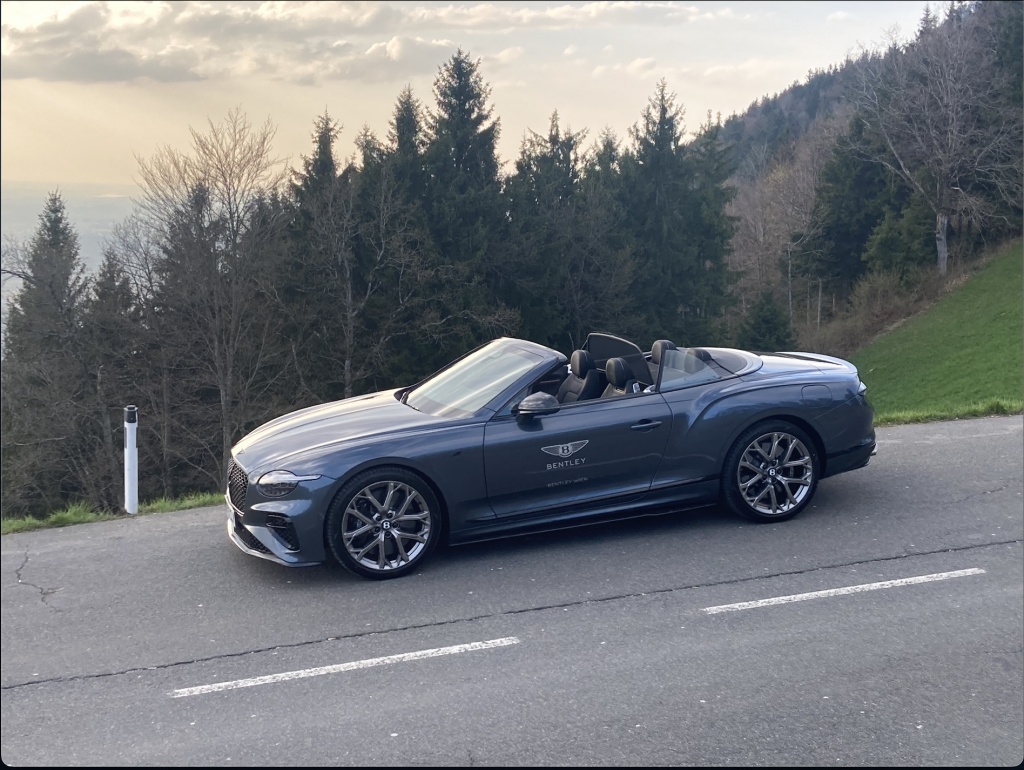
Der Wagen gleitet durch Salzburg, und nach wenigen Minuten hat man sich daran gewöhnt. Der elektrische Teil des Antriebs arbeitet so unauffällig, dass man nicht mehr darüber nachdenkt.Das ist vielleicht das beste Kompliment, das man einem Hybridantrieb machen kann.Der V8 kommt später.Und dann ist wieder etwas zu hören.
Der 4,0-Liter-Biturbo wird von einem Elektromotor unterstützt, gemeinsam entstehen 680 PS und 930 Newtonmeter. 3,5 Sekunden auf 100 km/h, 306 km/h Höchstgeschwindigkeit.Das sind Zahlen, die man kurz zur Kenntnis nimmt.Dann fährt man weiter.Denn der Continental war nie ein Auto, das von Zahlen lebte.
Er lebte von der Art, wie diese Zahlen eingesetzt werden.Der Bentley beschleunigt nicht hektisch.Er beschleunigt einfach.Und zwar sehr.
Der Geist der Bentley Boys
Vielleicht hätten die Bentley Boys mit einem Hybrid sogar mehr anfangen können, als man denkt.Nicht mit der Batterie.Aber mit der Idee dahinter.
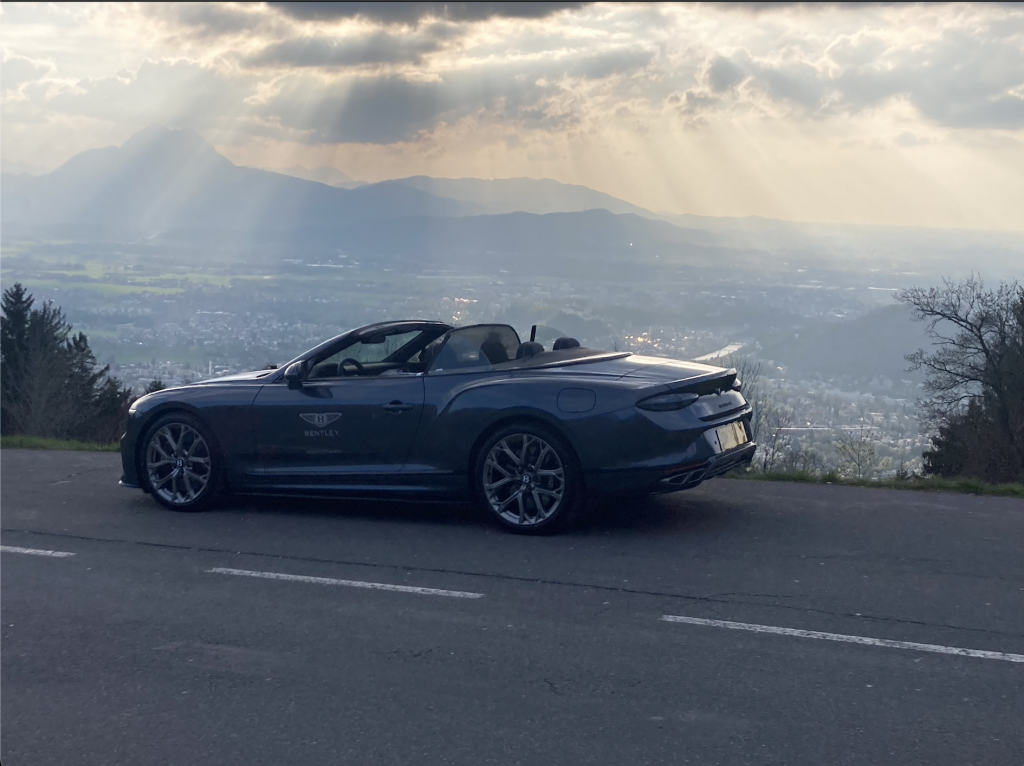
Denn Bentley war damals keine Marke für asketische Puristen. Die Bentley Boys wollten Rennen gewinnen, aber sie wollten auch gut essen, schnell fahren, feiern und das Leben genießen.Le Mans und Champagner waren kein Widerspruch.Im Gegenteil.Der Bentley war das passende Auto für beides.Das macht die Geschichte heute so interessant.Denn der Continental GTC S ist ebenfalls kein Auto, das sich über Verzicht definiert.
Er ist schnell.Er ist schwer.Er ist aufwendig.Er ist luxuriös.Und er kann elektrisch durch die Stadt rollen.Das klingt zunächst nach einem ziemlich modernen Widerspruch.Vielleicht ist es aber nur eine zeitgemäße Form jener historischen Bentley-Idee: Man darf Leistung haben, ohne asketisch zu werden.
Der W12 fehlt
Natürlich fehlt er.Der W12 war eine jener technischen Anomalien, die irgendwann zum Markenzeichen wurden. Zwölf Zylinder, zwei Turbolader, sehr viel Metall und eine Souveränität, die schon im Stand Eindruck machte.
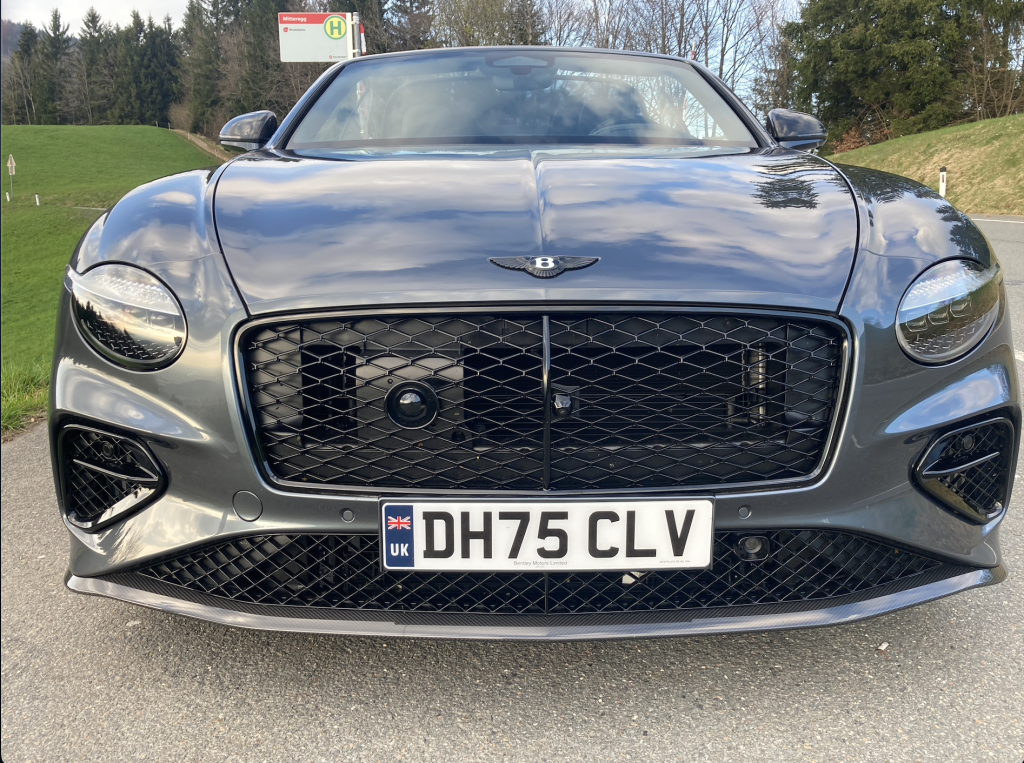
Der neue V8 klingt anders.Er ist direkter, kompakter, etwas härter.Weniger Orgel.Mehr Schlagzeug.Er versucht nicht, den W12 nachzuspielen.Das ist klug.
Der Elektromotor schiebt unten herum, der V8 übernimmt, wenn es ernst wird. Der Übergang ist so sauber, dass man kaum darüber nachdenkt, welcher Antrieb gerade welchen Teil der Arbeit erledigt.Es fährt.Das ist entscheidend.Mit offenem Dach bekommt man vom V8 außerdem mehr mit.Er klingt nicht aristokratisch.Aber ziemlich überzeugend.
Die Serpentinen rufen
Der Gaisberg ist eine gute Teststrecke, weil er ein Auto nicht fragt, wie es aussehen möchte.Er fragt, wie es fährt.
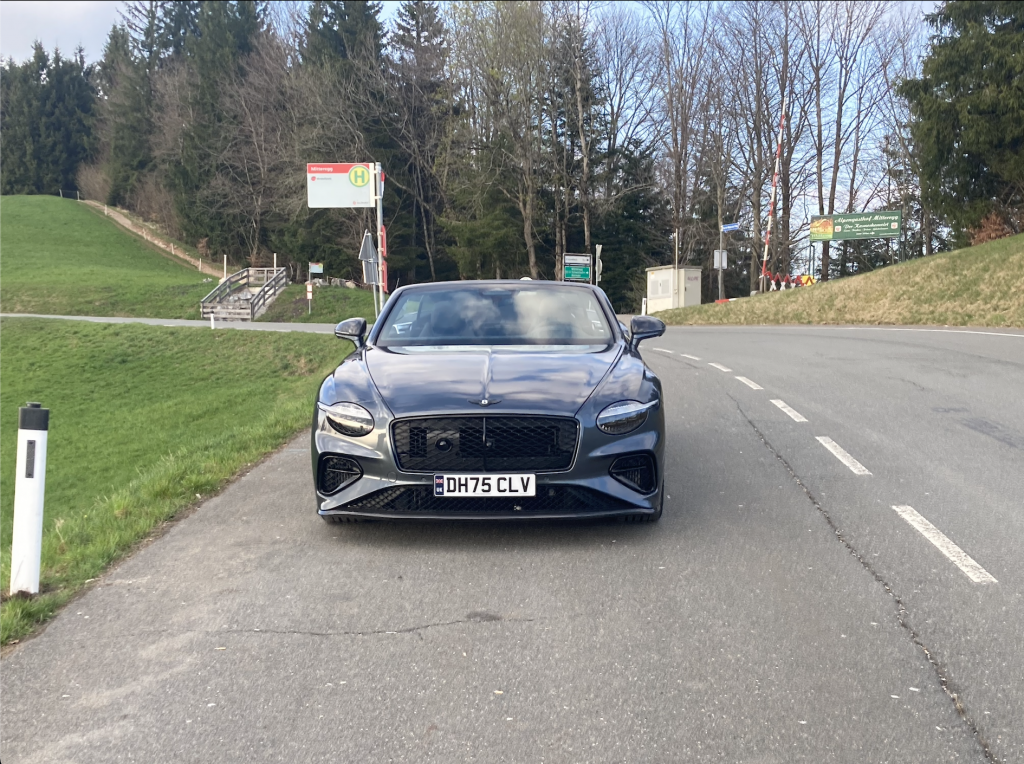
Der GTC S hat dafür einiges an Technik dabei: Hinterachslenkung, aktive Wankstabilisierung, Torque Vectoring, Allradantrieb und ein elektronisches Sperrdifferenzial.Auf dem Datenblatt ist das eine lange Liste.Am Berg wird daraus ein ziemlich interessantes Fahrgefühl.Das Auto fühlt sich kleiner an.Nicht leicht – das wäre angesichts von mehr als zweieinhalb Tonnen eine Beleidigung für die Physik.Aber kleiner.Die Vorderachse reagiert sauber.Die Karosserie bleibt kontrolliert.Hinten hilft die Elektronik beim Einlenken und Herausbeschleunigen.
Und irgendwann passiert etwas, das bei einem Bentley dieser Dimension eigentlich nicht passieren dürfte:Man wartet auf die nächste Kurve.Nicht weil man sie möglichst aggressiv nehmen möchte.Sondern weil das Auto es kann.
„Bentley hat nicht gelernt, Gewicht verschwinden zu lassen. Die Ingenieure haben gelernt, damit umzugehen.“
Ein anderer Zugang zu Geschwindigkeit
Der GTC S ist kein Sportwagen.Das bleibt wichtig.Die Lenkung ist ruhig, nicht überinformiert. Sie erzählt nicht von jedem Kieselstein. Sie versucht nicht, den Fahrer permanent davon zu überzeugen, dass gerade ein besonderer Moment stattfindet.Das Auto weiß selbst, dass es schnell ist.Es muss nicht darüber reden.Das erinnert tatsächlich ein wenig an die Bentley Boys.
Auch sie waren keine Vertreter des automobilen Puritanismus. Sie wollten nicht möglichst wenig Auto. Sie wollten das richtige Auto für ein möglichst großes Leben.Der Bentley Continental GTC S ist die moderne, ziemlich luxuriöse Version dieses Gedankens.Nur dass inzwischen ein Elektromotor mithilft.
Schwarz statt Chrom
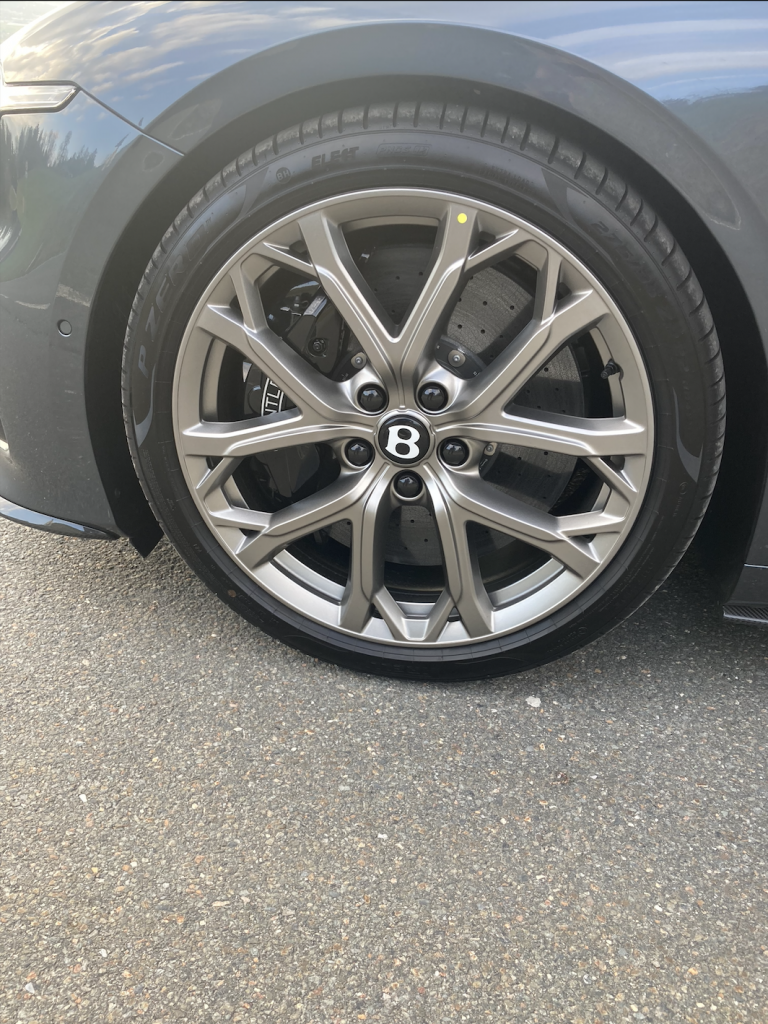
Beim GTC S wird das traditionelle Chrom zurückgenommen.Schwarz statt Silber.Dazu 22-Zoll-Räder und dunkle Details.Mehr braucht es nicht.Der Continental ist ohnehin eine große Erscheinung. Die schwarzen Elemente geben ihm etwas weniger die Aura eines ehrwürdigen Herrenclubs und etwas mehr die eines Londoner Place-to-be Nachtclubs.
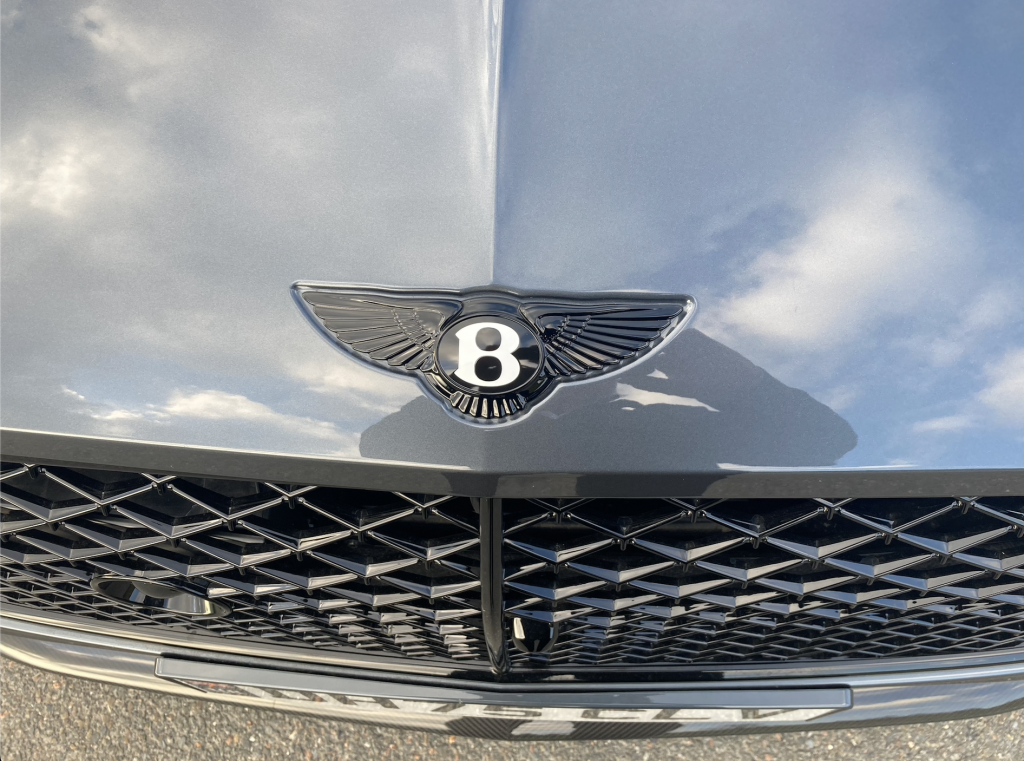
Das passt erstaunlich gut.Denn mit offenem Dach verliert der Continental ein wenig von seiner Förmlichkeit.Er wirkt freier.Und einen Spritzer juveniler dann.Das wird bei einem Bentley erst mal so nicht angenommen.
Inside traditionally Bentley
Innen wird es wieder sehr britisch.Leder.Holz.Metall.Teppich.Schalter.Dinge, die man anfassen kann.Das klingt banal.Ist es aber nicht.In einer Luxuswelt, die immer stärker aus Displays besteht, ist ein Innenraum, der sich über Materialien und Haptik definiert, fast schon eine Gegenbewegung.
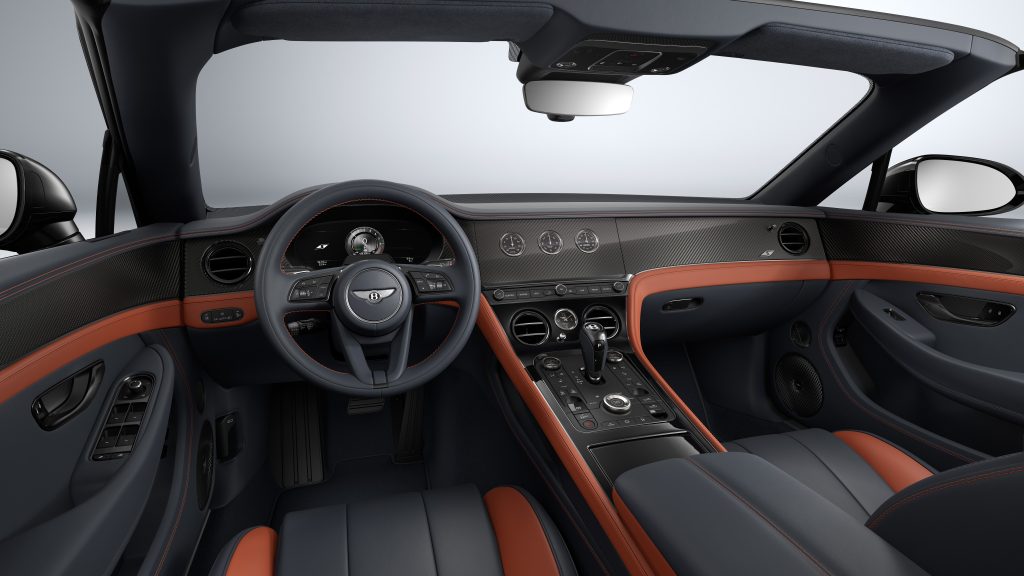
Der drehbare zentrale Bildschirm gehört weiterhin zu den schönsten kleinen Bühnenstücken der Branche.Das Infotainment selbst ist inzwischen nicht mehr Klassenprimus. Andere Hersteller können Bildschirm besser.Bentley kann dafür noch Dinge bauen, die man gerne berührt.Und das ist bei einem Luxusauto vielleicht wichtiger.Luxus ist selten das, was man unbedingt braucht.Es ist das, was man vermisst, sobald es nicht mehr da ist.
Der Bentley Grundhaltung bleibt.

Natürlich hat der neue GTC S mit den Bentley Boys von 1929 ungefähr so viel gemeinsam wie eine Smartwatch mit einer Taschenuhr.Aber die Haltung ist verblüffend ähnlich.Man fährt nicht, weil man muss.Man fährt, weil man kann.Man nimmt den Umweg.Man bleibt länger.Man fährt schneller, wenn die Straße es erlaubt.Und man macht aus einer Reise etwas, das sich nach mehr anfühlt als nach Transport von A nach B.Man könnte es auch wie bei einem Champagnergenuss eine wohltemperiertes Reiseabenteuer nennen.Das war schon damals eine ziemlich gute Idee und ist es heute umsomehr.Heute wird sie dabei elektrisch unterstützt.
Distanzen zu Events formen.
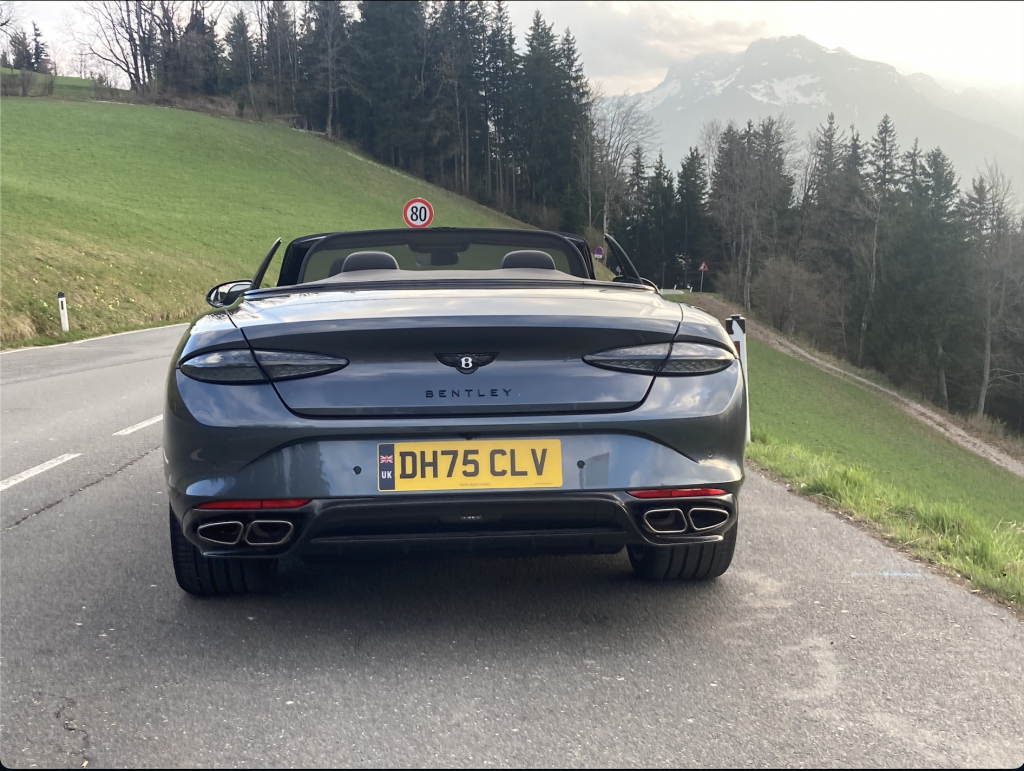
Am Ende ist das vielleicht die eigentliche Stärke des GTC S.Nicht die 680 PS.Nicht die 3,5 Sekunden.Nicht die 306 km/h.Sondern das Gefühl, dass man noch nicht angekommen ist.Man fährt elektrisch durch Salzburg.Dann kommt der V8.Dann der Gaisberg.Dann wieder die Stadt.Und irgendwann könnte man nach Hause fahren.Man tut es aber nicht.Man nimmt noch einen Landstrasse.Noch eine Kurve.Das ist Grand Touring.
Nicht möglichst schnell anzukommen.Sondern einen guten Grund zu finden, warum man noch nicht angekommen ist.Die Bentley Boys hätten das vermutlich verstanden.Vielleicht hätten sie sogar den Hybrid akzeptiert.Nach einer kurzen Probefahrt.Und einem Drink.
Fazit
Bentley Continental GTC S
9/10
Der GTC S ist kein Ersatz für den W12.
Er ist etwas Interessanteres: ein Beweis dafür, dass die Bentley-Idee auch nach dem W12 noch funktioniert.
Der Antrieb verbindet V8 und Elektromotor mit bemerkenswerter Selbstverständlichkeit. Das Fahrwerk kaschiert die Masse besser, als man einem 2,6-Tonnen-Cabriolet zutrauen würde, und der Innenraum bleibt eine Klasse für sich.
Der W12 fehlt.Natürlich.
Aber der V8 hat Charakter, und die Hybridtechnik nimmt dem Auto erstaunlich wenig von seiner Seele.
Am Gaisberg zeigt sich außerdem, dass die sportlichere Ausrichtung des S-Modells mehr ist als schwarze Zierleisten und große Räder.Der Bentley kann Kurven.Sogar ziemlich gut.Er bleibt dabei das, was er sein soll: kein Sportwagen, sondern ein sehr schneller, sehr komfortabler und sehr aufwendiger Reisewagen.
Die Bentley Boys hätten ihn wahrscheinlich gemocht.
Nicht wegen der Batterie.Wegen der Möglichkeit, nach dem Gaisberg noch weiterzufahren.
TECHNISCHE ZUSAMMENFASSUNG
Bentley Continental GTC S
Continental GTC S
Motor 4,0-l-V8 Biturbo + Elektromotor
Systemleistung 680 PS
Systemdrehmoment 930 Nm
Batterie 25,9 kWh
Antrieb Allrad
Getriebe 8-Gang-Doppelkupplung
0–100 km/h 3,5 s
Höchstgeschwindigkeit 306 km/h
Fahrwerk Performance Active Chassis
Hinterachslenkung ja
aktive Wankstabilisierung ja
Torque Vectoring ja
Sperrdifferenzial elektronisch
Räder 22 Zoll
Karosserie 2+2-Cabriolet
Gewicht rund 2,6 Tonnen
Preis D ca. 275.000/ A ca.400.000 Euro
Bentley gibt je nach Markt und Ausführung geringfügig unterschiedliche Gewichts- und Reichweitenwerte an; die Werksangaben nennen 680 PS, 930 Nm, 3,7 Sekunden auf 100 km/h und 308 km/h Spitze.
Kurz gesagt
Ein Bentley für die Zeit nach dem W12: weniger nostalgisch, mehr elektrisch, aber noch immer mit jener alten Fähigkeit, aus einer normalen Straße eine ziemlich gute Idee zu machen.
Und vielleicht ist genau das die schönste Verbindung zwischen den Bentley Boys und dem GTC S:
Man muss nicht vernünftig sein. Man muss es nur stilvoll tun.
text mk fotos beyondcoolmag_Bentley Motors Ltd.
Excellence is an attitude
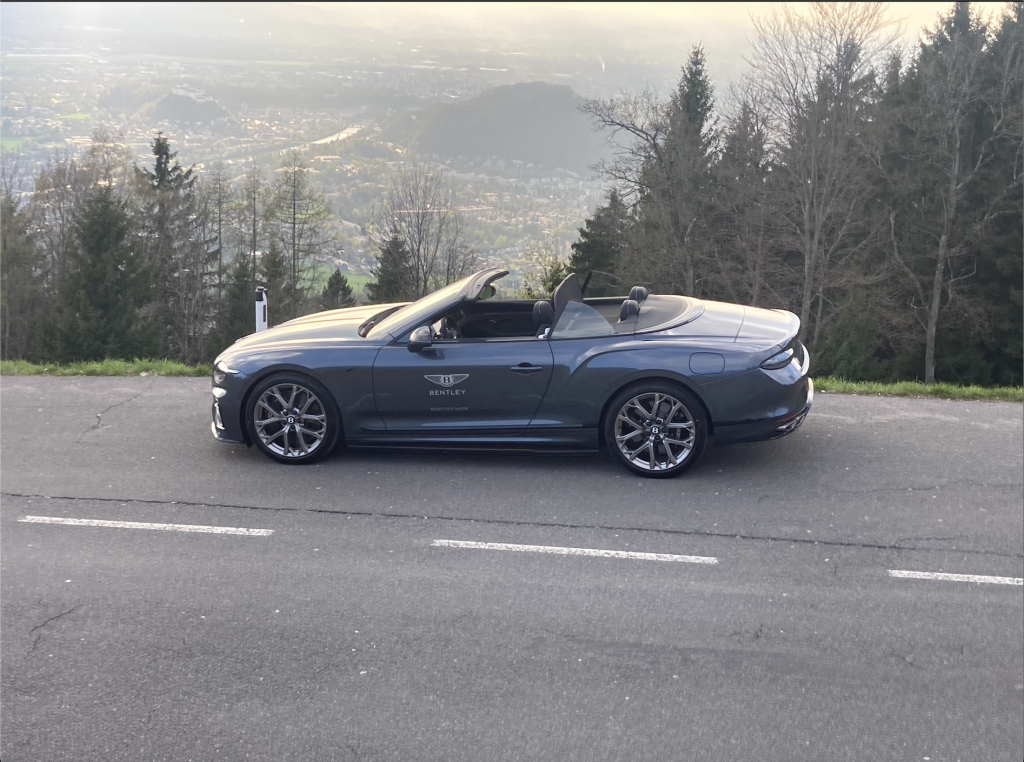
There are some things you are not supposed to electrify.A Bentley W12 is one of them.
For decades, the formula seemed almost sacred: a huge engine, immense torque, acres of leather and enough effortless acceleration to make geography feel negotiable. The W12 didn’t merely power a Bentley. It defined the idea of one.And now it is gone.In its place sits a 4.0-litre twin-turbocharged V8, an electric motor and a 25.9 kWh battery. Together they produce 671 bhp and 930 Nm.
Sacrilege?Not quite.
Because we are in Salzburg, climbing the Gaisberg, and this is a rather appropriate place to reconsider what Bentley’s new Continental GTC S is actually trying to achieve.

The Gaisberg has been testing cars for almost a century. International hillclimb racing began here in 1929, and for decades the mountain attracted some of Europe’s greatest drivers and machines. Names such as Rudolf Caracciola, Hans Stuck, Jochen Rindt, Rolf Stommelen and Niki Lauda all appeared in the Gaisberg’s racing story. The course eventually became part of the European Hill Climb Championship before the final race was held in 1969.
Today, the road is considerably quieter.But the mountain still has a way of exposing a car’s character.And somewhere between Salzburg and the summit, with the roof folded away and the Austrian landscape opening beneath us, the strangest thing happens.The hybrid Bentley begins to make perfect sense.
Bentley’s Sweet Spot
The GTC S occupies an interesting place in the Continental family.
Above it sits the ferocious Speed. Below it, the standard Continental GT. The S effectively takes much of the Speed’s dynamic hardware and combines it with a slightly less aggressive interpretation of Bentley’s High Performance Hybrid V8.The result may be the sweet spot of the range.The figures are still absurd.
Zero to 100 km/h takes just 3.7 seconds, while top speed is 308 km/h. Maximum torque is 930 Nm.Numbers like these would be remarkable in a dedicated sports car.In a handcrafted luxury convertible weighing more than 2.6 tonnes, they are extraordinary.But numbers have never been the reason to buy a Continental.

A Ferrari can accelerate harder. A Porsche can corner faster. A Lamborghini can make considerably more noise.None of them quite does this.Because the Continental’s great trick has always been to make speed feel effortless.Press the starter and there is no theatrical explosion of cylinders. Instead, the GTC S can simply glide away under electric power, almost silently.
Around Salzburg, it feels less like a 671bhp performance machine and more like a private lounge that happens to have four wheels.Comfort mode is astonishingly composed. Broken road surfaces disappear beneath the suspension. Expansion joints become suggestions. The car doesn’t so much absorb imperfections as refuse to acknowledge them.Then the Gaisberg rises ahead.And Bentley’s personality changes.
From Grand Touring to Hillclimb
There is something faintly amusing about bringing a car like this to a road with such a racing pedigree.The original Gaisbergrennen was not designed for grand touring. It was designed to separate brave drivers from very fast machinery.The first event in 1929 ran from Salzburg towards the summit, and more than 20,000 spectators lined the route. Later versions used an 8.65-kilometre course climbing 672 metres. In the post-war era, Porsche, BMW, Borgward and Abarth were among the manufacturers competing here, while drivers such as Hans Herrmann and Gerhard Mitter attacked the mountain in increasingly specialised machinery.
The GTC S is about as far removed from a lightweight hillclimb special as it is possible to imagine.And yet the mountain suits it.Push the accelerator deeper and the V8 wakes up.There is no artificial attempt to recreate the old W12. Instead, the engine arrives with a deep, muscular authority that feels distinctly Bentley.The electric motor fills the gaps. The V8 supplies the character.
The transition between the two is so seamless that you rarely notice the engineering underneath it. There is simply acceleration — vast, immediate and strangely civilised.On a road once used by racing cars, the GTC S dispatches the uphill sections with almost comical ease.With the roof down, the soundtrack becomes part of the experience.
It does not have the aristocratic thunder of the W12, and pretending otherwise would be pointless. But the V8 has its own voice: deeper, harder and more purposeful.It sounds like an engine that means business.
And then you remember that you are climbing a historic racing mountain at an entirely unreasonable pace while sitting in a cabin that smells of leather.This is Bentley’s particular kind of absurdity.
Balancing the stone
The real surprise, however, comes when the road starts twisting.Because this is where the GTC S should feel compromised.It weighs more than 2.6 tonnes. It has a folding roof. It carries a substantial battery.By every conventional measure, it should feel like a yacht being persuaded to slalom.It doesn’t.
The Performance Active Chassis system brings together Bentley Dynamic Ride, active roll control, active all-wheel drive, rear-wheel steering and torque vectoring through an electronic limited-slip differential. Bentley says the system is designed to reduce body movement while improving traction and cornering behaviour.On the Gaisberg, you begin to understand why.
Turn into a corner and the nose responds with an eagerness that seems completely at odds with the car’s dimensions. The body stays impressively controlled. The rear axle subtly helps rotate the car, and suddenly the Continental feels smaller than it has any right to.Not small, exactly.But manageable.You can still feel the weight. And that’s important.
Bentley hasn’t tried to disguise the physics completely. Instead, it has given the car the tools to work with them.The steering remains deliberately calm. There isn’t much of the fingertip chatter you might find in a Porsche or Ferrari.But that is precisely the point.The GTC S isn’t trying to become a sports car.It is a grand tourer that has discovered it can dance.
Black Is the New Chrome
Then there is the way it looks.The S treatment suits the Continental beautifully.Chrome gives way to blackline detailing. The 22-inch wheels fill the arches perfectly. Dark exterior accents sharpen what is otherwise an inherently elegant shape.The effect is subtle but significant.
The old Bentley image — country estate, tweed jacket, private members‘ club — has been replaced by something altogether more nocturnal.Think Monaco marina.Think midnight.Think considerably more trouble.And yet the cabin remains unmistakably Bentley.
The Last Great Tactile Interior?
Inside, Crewe continues to play a different game from almost everyone else.
The materials aren’t simply expensive; they feel deliberately chosen. Diamond-quilted leather, cool metal controls, deep carpeting and beautifully executed stitching create an environment that feels made rather than assembled.This matters more than ever.The modern luxury-car industry has become obsessed with screens. Bigger displays, more menus, more digital surfaces.
Bentley still understands that luxury is something you feel.
A switch has weight.A rotary controller has resistance.Leather has texture.Metal feels cold beneath your fingers.And the rotating central display remains a wonderful piece of theatre — a mechanical flourish in a world increasingly defined by software.
The infotainment itself is perfectly competent, although visually it no longer feels as special as the rest of the cabin. The hybrid hardware inevitably takes its toll on luggage space, too.But these are minor blemishes on an otherwise exceptional interior.
The W12 Problem
There is, of course, one elephant in the room.The W12 is dead.For Bentley traditionalists, no amount of hybrid sophistication will completely erase that loss. The old twelve-cylinder engine was not merely a powertrain. It was part of Bentley’s identity.But perhaps the better question is not whether the hybrid V8 replaces it.It doesn’t.The better question is whether the new car still feels like a Bentley.After a day around Salzburg and up the Gaisberg, the answer is emphatically yes.Perhaps more importantly, it feels like a Bentley that understands the world has changed.
The Art of Going Somewhere
That is ultimately what makes the GTC S so convincing.It isn’t the fastest convertible you can buy.It isn’t the sharpest.It isn’t the most technologically extravagant.It doesn’t need to be.Instead, it does something increasingly rare.It makes travelling feel important.
With the roof down, the Alps rising in the distance and 671 bhp sitting beneath your right foot, even an ordinary stretch of Austrian road becomes an occasion.On the Gaisberg, there is another layer to the experience.You are driving a modern Bentley on a mountain where generations of racing drivers once chased seconds rather than scenery. The original competitors attacked these bends with stripped-down machinery, enormous courage and very little electronic assistance.
The GTC S approaches them with leather seats, air conditioning, a folding roof, electric propulsion and enough computing power to make a 1950s racing engineer faint.Yet the fundamental pleasure remains surprisingly familiar.Find the next corner.Feel the car settle.Open the throttle.Climb.It is not a hillclimb car.
But for a few kilometres, you can understand why this mountain has always made people want to drive faster.
Verdict
Bentley Continental GTC S — 9/10
The Continental GTC S is not a replacement for the W12. It is something more interesting: evidence that Bentley can move into the hybrid era without surrendering the qualities that made its grand tourers special.
The performance is immense, the chassis is far more capable than a car of this size has any right to be, and the cabin remains one of the most convincing expressions of automotive craftsmanship available today.
Its greatest achievement, however, is balance.
The GTC S can creep silently through Salzburg, waft along an Alpine highway, attack a sequence of Gaisberg corners and then settle back into effortless long-distance cruising — all without ever seeming confused about what it is.There are faster cars.There are sportier cars.There are more technologically impressive cars.
But very few cars combine speed, comfort, craftsmanship and occasion quite like this.
The W12 may have been more theatrical.The GTC S is more complete.And perhaps that is exactly what Bentley needs now.
Pros
- Effortless 671bhp hybrid performance
- Exceptional ride and refinement
- Remarkably agile chassis for its size and weight
- Superb craftsmanship and tactile interior
- Convertible character without sacrificing grand-touring ability
- Blackline styling suits the S perfectly
Cons
- More than 2.6 tonnes is still more than 2.6 tonnes
- Hybrid hardware compromises luggage space
- Infotainment presentation is beginning to look dated beside newer rivals
- The W12’s emotional theatre is impossible to reproduce
The verdict in one sentence:
The Continental GTC S proves that Bentley’s future can be electrified without becoming sterile — and on the Gaisberg, it discovers a surprisingly convincing connection with the marque’s old-fashioned love of speed.
Technical Summary
| Specification | Bentley Continental GTC S |
| Powertrain | 4.0-litre twin-turbocharged V8 + electric motor |
| Hybrid system | Plug-in hybrid |
| Battery | 25.9 kWh |
| Combined power | 671 bhp |
| Maximum torque | 930 Nm |
| 0–100 km/h | 3.7 seconds |
| Top speed | 308 km/h |
| Transmission | Dual-clutch automatic |
| Drive | All-wheel drive |
| Chassis | Bentley Performance Active Chassis |
| Key chassis technology | Active roll control, rear-wheel steering, torque vectoring, electronic limited-slip differential |
| Wheels | 22-inch |
| Body | Four-seat convertible |
| Kerb weight | More than 2.6 tonnes |
| Character | Luxury grand tourer with genuine performance ability |
| Price | £233,700 UK |
Bentley’s official figures confirm 671 bhp, 930 Nm, 0–100 km/h in 3.7 seconds and a 308 km/h top speed, together with the Performance Active Chassis hardware used by the GTC S.
Final Thought
The Gaisberg is an unusually appropriate place to test the GTC S.For almost forty years, drivers came here to discover how quickly a car could climb a mountain. Today, Bentley arrives with a very different interpretation of performance.It doesn’t need to conquer the mountain.It simply needs to make the journey memorable.
And with the roof down, Salzburg behind you and the road winding towards the summit, it does.
copy mk images beyondcoolmag_Bentley Motors Ltd.
Hinweis im Sinne der Corporate Compliance Leitlinien: Die Teilnahme an internationalen Fahrzeug- und Technikpräsentationen erfolgt großteils auf Basis von Einladungen seitens der Automobilimporteure oder Hersteller. Diese stellen auch die hier zur Besprechung kommenden Testfahrzeuge zur Verfügung.